The Alchemy of Loss
Ideas come to us as the successors to griefs, and griefs, at the moment when they change into ideas, lose some of their power to injure our heart — Marcel Proust
There is an overwhelming presence of nature in Hamnet—nature in both its raw and pristine glory, certainly, but also the nature of man, the nature of woman, and the nature of children. Above all, it captures the unpredictable nature of life itself: its joys, celebrations, and gratitude set against the inevitable weight of suffering, misery, and grief. The film reveals that while the vicissitudes of nature are inescapable, it is quintessentially human to sublimate our suffering into beautiful art. This is precisely what Will (Paul Mescal) does in director Chloé Zhao’s Hamnet—transmuting personal agony into the play The Tragedy of Hamlet, and in doing so, immortalizing his son for eternity.
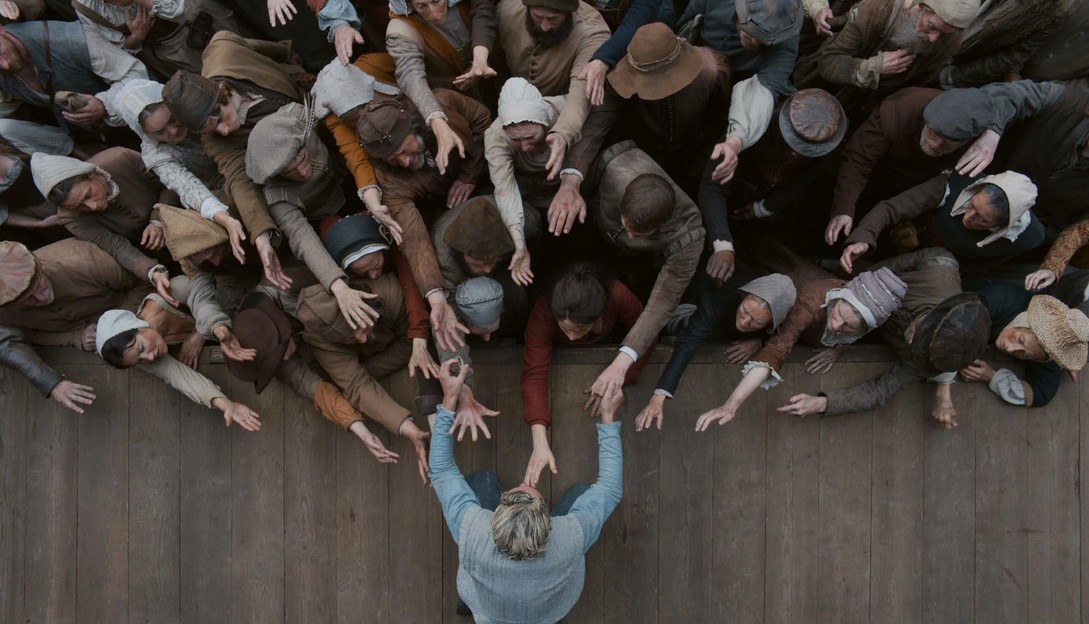
Where other movies in its genre merely scratch the surface, Hamnet cuts deep with its raw, intimate human emotions tracing not just the result of Will’s grief but the precise, painful origins of his written words when he contemplates his own end when breathing life into those now-immortal lines:
To be, or not to be, that is the question:
Whether ’tis nobler in the mind to suffer
The slings and arrows of outrageous fortune,
Or to take arms against a sea of troubles
And by opposing end them.
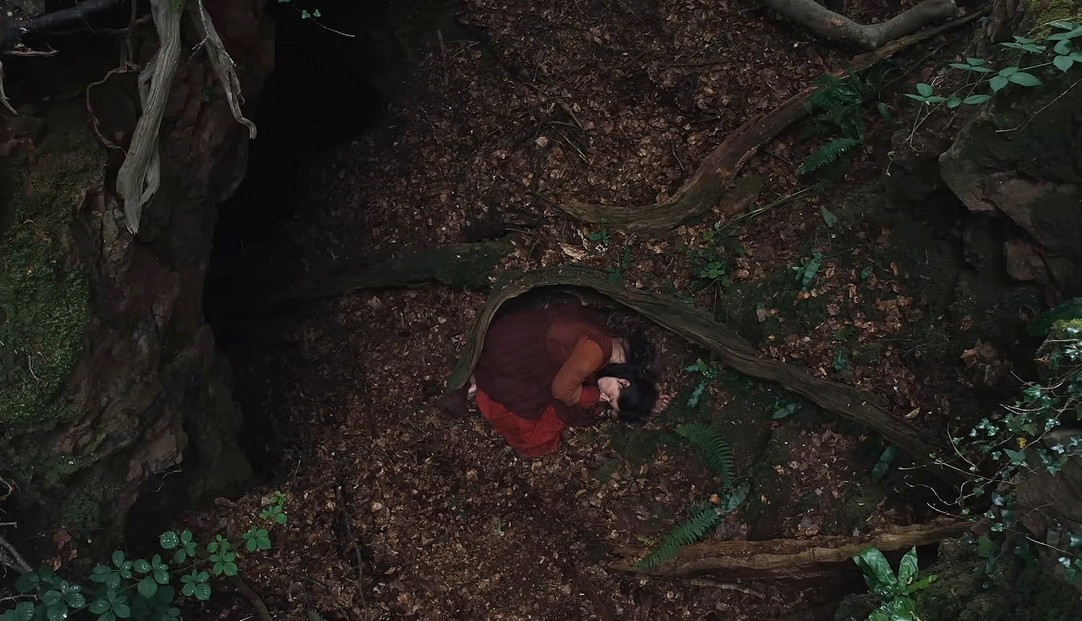
Yet, the film belongs equally—perhaps even more so—to Will’s wife, Agnes (a well-deserved, Oscar-winning performance by Jessie Buckley). She is a healer born from the “womb of nature,” both literally and metaphorically. In a striking opening sequence, Zhao shows Agnes curled in a fetal position amidst the massive roots of an ancient tree. It is under this same wilderness canopy that she delivers her firstborn, Susanna—a poignant moment that finds a devastating emotional payoff in the film’s final act.
In many ways, Agnes performs her own alchemy, sublimating roots, leaves, and herbs into life-saving concoctions. However, when the plague finally strikes her son, Hamnet, her “medicines” cannot shield him from death’s clutch, leaving her as shattered as her husband. It is only in the final scene, as she watches Will’s play unfold, that she finds the grace to forgive. It is a moment that moves one to tears—especially for those who recognize the literary metaphors Will has used to resurrect their boy.
Based on the novel by Maggie O’Farrell and set within the earthy, visceral landscapes of late 16th-century England, Hamnet is both a literary masterpiece and a cinephile’s delight. It flows with the soul of a vintage novel while speaking the cinematic language of a true auteur. If you have read Hamlet, you will find the climax immensely moving; if you haven’t, you will leave the theater seeing Shakespeare’s greatest work in an entirely new light.
 talking talkies