Baththa (2026)
Yours Truly decided to go in blind for the Tamil movie Baththa. A friend tried to strike up a conversation around it, but I didn’t fall for the trap. And man, am I glad I didn’t, for Baththa… was a revelation. Fret not, dear reader, I won’t spill the beans for you either. I assure you a spoiler-free review.
Life closes some doors and opens others. In Baththa, a door closes so hard that it refuses to open. But when it finally does, it changes lives and all hell breaks loose. That’s as much as I can say without giving anything away.
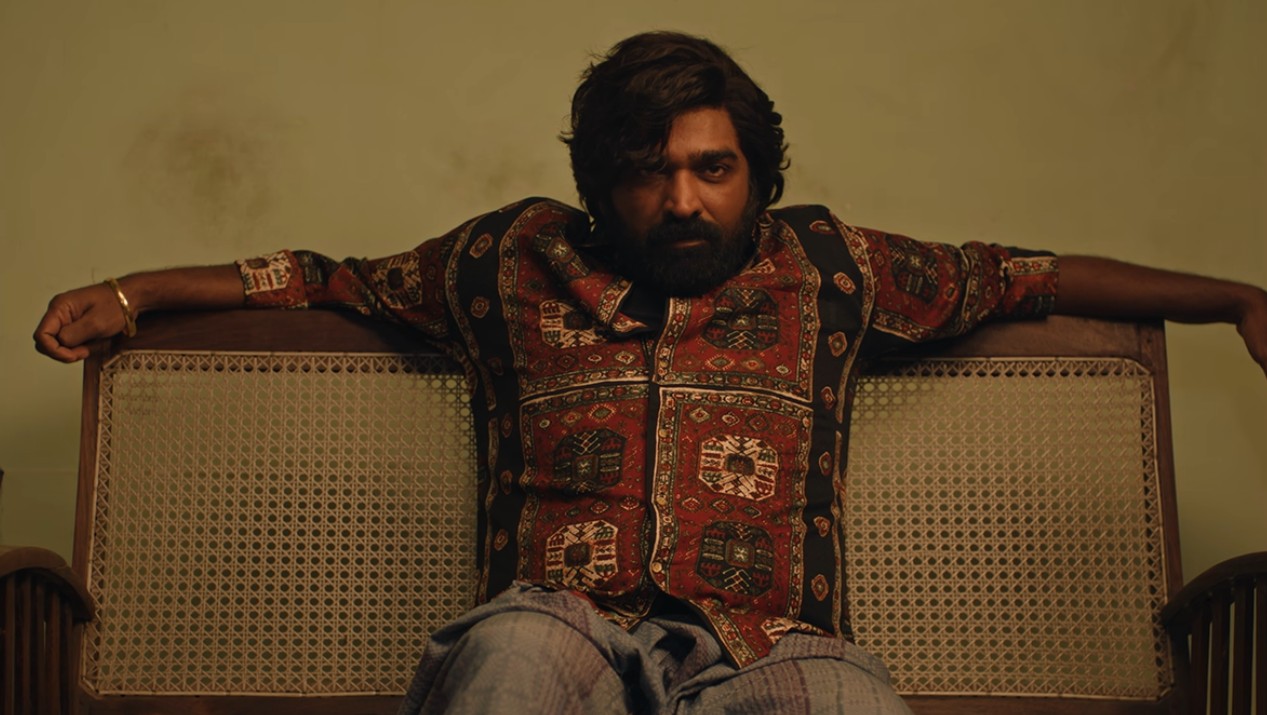
Director Balaji Tharaneetharan, who cast actor Vijay Sethupathi in his directorial debut Naduvula Konjam Pakkatha Kaanom (NKPK), reunites with the master actor in the titular role of Baththa to recreate the magic of NKPK. A simple, yet profound role for the ages. Remember Vijay Sethupathi’s cricket-ball running gag in NKPK:
Nee thaane adicha? Ball mela pochu… ssssa, vittenaa…
Well, there’s a thin line between a clichéd trope and a signature. Tharaneetharan repeats this style of his with such finesse in Baththa that it evokes twice the laughter this time. I hope to see him repeat it in his movies again, and again, and again…
Anyone could have played the titular role of Baththa—a menacing local gangster in ’80s Madras who undergoes a life-changing transformation in ways most absurd and unthinkable, thanks to the unintentional, innocent act of a Class 3 child. However, none could’ve played it like Sethupathi with his trademark mannerisms, swag, and nonchalance. He effortlessly switches between a ruthless gangster, a doting father, and a repentant husband—all flawed in more ways than one. But the icing on the cake comes in the climax when tone-deaf Baththa does the unexpected. This move could’ve easily misfired for both the character and the director. Instead, it ends up winning the audience’s heart, both in the movie and outside of it.
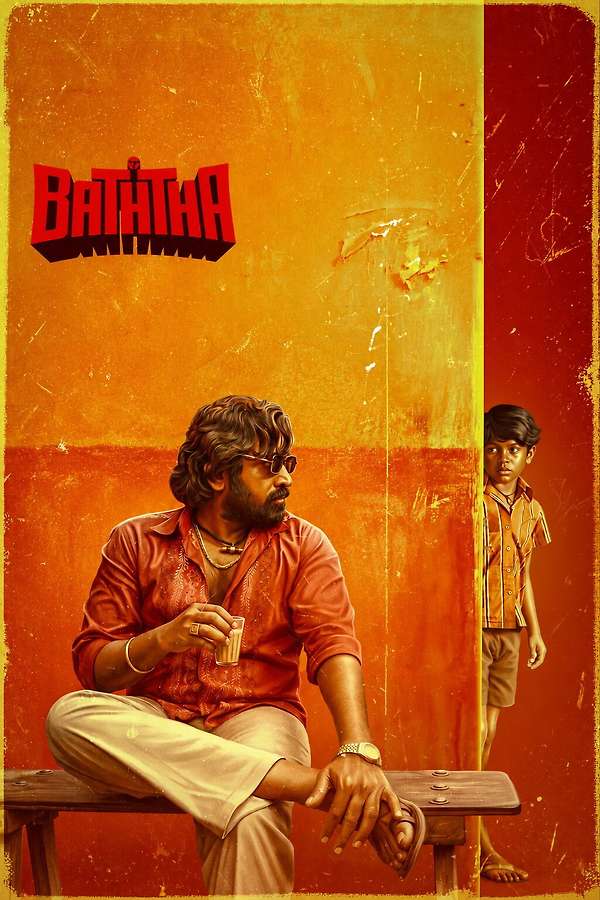
In an industry driven by numbers, VFX, massy scenes, and spectacle, it is reassuring to see heartwarming cinema like Baththa win equal appreciation from audiences and critics alike. Tharaneetharan’s strength is his simplicity—so much so that he has mastered the art of narrating modest premises with conviction and spellbinding intrigue. A mechanical wooden toy, wall doodles, paper cameras, or even the humble pora (rusk) biscuit—he effectively uses these childhood motifs to evoke nostalgia and instil a sense of warmth in his frames and narrative. Both Sethupathi and child actor Sai Prithviraj wield these props to great effect.
In that sense, if Baththa is the heart of the film, then Sabari (a brilliant debut by Sai Prithviraj) is the soul of the movie. Sethupathi anchors the narrative with gravitas, yet the movie belongs equally to Sabari, who sweats, huffs, and puffs his way through every predicament like his life depends on it. And depend on it, it does—in ways unimaginable, where little Sabari, knowingly or unknowingly, becomes both the inflictor of the hardship and the provider of protection. Sabari’s role, in that sense, assumes a larger purpose in shaping Baththa’s character arc and reminds me of the famous Sufi poet Rumi, who often wrote about this dynamic:
He pulls you in one direction to break your ego and pulls you back to bring you home. The hand that strikes the drum is the same hand that makes the music.

